

Should I Take Ashwagandha Before an Interview?
Should I Take Ashwagandha Before an Interview? The night before a big interview, your mind does not rest. You rehearse answers in the dark. You second-guess your outfit. You replay every awkward thing you’ve ever said in a professional setting. By the time morning comes, you’re already exhausted and the interview hasn’t even started.
Thabo had been unemployed for four months in Johannesburg. He finally landed a call from a logistics company in Kempton Park. He prepared for two weeks straight. The morning of the interview, his hands were shaking so badly he spilled his coffee on his shirt. He showed up rattled, gave scattered answers, and didn’t get the job. Three weeks later, he tried again this time with a different approach. He got the offer on the spot.
The difference wasn’t his CV. It was how he managed what was happening inside his body before he walked through the door.
Why Most Candidates Fail Before the Interview Even Starts

Most job seekers focus entirely on what they’ll say in an interview. They memorise answers, research the company, iron their clothes. All of that matters. But very few people manage their physiological state going in and that’s where interviews are often lost.
When cortisol spikes, your working memory drops. You forget things you know. You stumble on words you’ve said a hundred times. You come across as nervous when you’re actually competent.
This is why the question “should I take ashwagandha before an interview?” is more legitimate than it sounds. It’s not about being calm for the sake of it. It’s about performing at the level you’ve actually prepared for.
What Ashwagandha Actually Does — No Hype
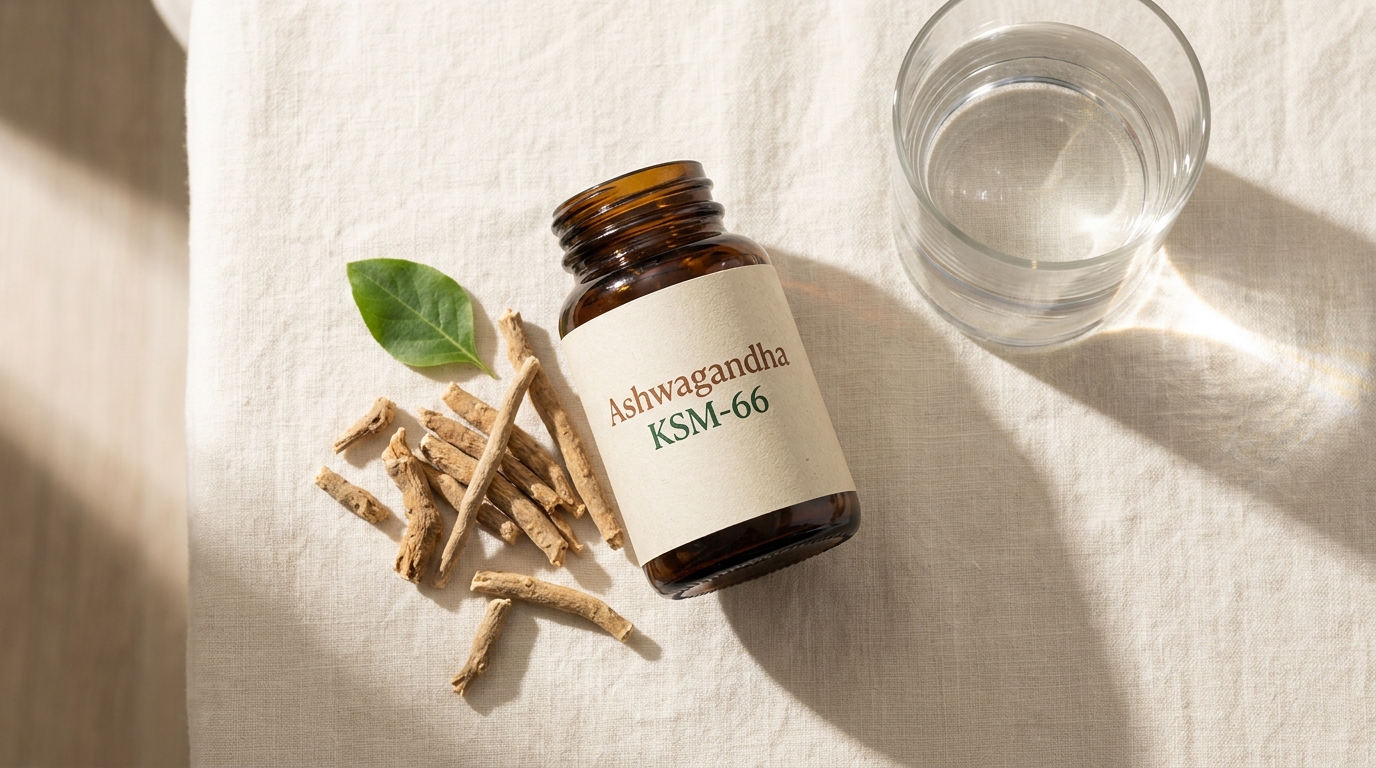
Ashwagandha is an adaptogenic herb used in Ayurvedic medicine for thousands of years. In plain terms: it helps your body regulate the stress response. It lowers cortisol, reduces anxiety symptoms, and supports mental clarity under pressure.
The research is real. A 2019 clinical study published in Medicine found that participants who took 240mg of standardised ashwagandha extract daily showed significantly reduced cortisol levels and self-reported anxiety compared to a placebo group. This wasn’t a supplement company funding the study it was a peer-reviewed trial.
What this means practically: ashwagandha doesn’t sedate you. It doesn’t make you feel foggy or fake-calm. It takes the edge off the cortisol spike that makes your brain go blank when the interviewer says “So, tell me about yourself.”
That said — it is not a last-minute fix. Taking it the morning of your interview for the first time will do very little. Adaptogens build up in your system. The candidates who benefit are the ones who’ve been taking it consistently for 2–4 weeks before the interview date.
How to Use It Without Overcomplicating It
You don’t need to become a supplement expert. This is the simple approach:
Start 3–4 weeks before your interview period — especially if you know job applications are active and interviews could come at any time. A standard dose is 300–600mg of a KSM-66 or Sensoril extract (these are the forms used in most quality studies). Take it with food, once daily.
On interview morning specifically, pair it with a proper breakfast. Not just coffee. Your brain runs on glucose and your nervous system needs fuel. A banana, eggs, or peanut butter on toast before a 9am interview will do more for your composure than almost anything else.
The real point here: ashwagandha is a tool, not a strategy. Your strategy is still preparation.
The Preparation That Actually Gets You Hired
Here is what separates candidates who get offers from candidates who “interview well” but never get the call back.
1. Answer “Tell Me About Yourself” Without Rambling

This is the question most people waste. They either go too far back (“I was born in Limpopo…”) or they give a CV summary no one asked for.
Use the Present-Past-Future structure. 60 seconds maximum.
“I’m currently a logistics coordinator with three years of experience managing supply chains for FMCG clients across Gauteng. Before that, I completed my diploma in Supply Chain Management at CTI and worked my way up from a warehouse assistant role. I’m looking to move into a senior ops position where I can lead a team — which is exactly why this role caught my attention.”
Bold the result you want them to remember. In that example, it’s “lead a team.” That’s the thread you want running through the whole interview.
For more answer frameworks, Glassdoor’s common interview questions guide is worth reading the night before.
2. Handle “What’s Your Weakness?” Without Tanking Yourself
The classic mistake: saying something fake like “I work too hard” or “I’m a perfectionist.” Interviewers have heard it ten thousand times and it signals low self-awareness.
The better approach: name a real limitation, then show what you’ve done about it.
“Public speaking used to be a genuine weak point for me. I’d avoid presenting in team meetings even when I had something useful to contribute. Over the past year I’ve been doing Toastmasters online, and I’ve noticed a real shift. I still prepare more than most people would for a presentation, but I no longer avoid it.”
That answer is honest, specific, and shows growth. It doesn’t make you look weak it makes you look like someone who takes their own development seriously.
3. Use the STAR Method for Behavioural Questions
Any question that starts with “Tell me about a time when…” is a behavioural question. They’re designed to reveal how you actually operate — not how you think you’d operate in a hypothetical.
STAR stands for: Situation → Task → Action → Result.
MindTools has a clean breakdown of how to structure STAR answers worth bookmarking.
Q: “Tell me about a time you dealt with a difficult colleague.”
“We had a team project at my last company where one team member consistently missed deadlines, which was pushing my deliverables back. I raised it directly with her first — not to management and found out she was managing a family situation at home. We restructured the task split together. The project was submitted on time, and she actually thanked me afterwards for how I handled it.”
Notice what’s in that answer: a real situation, a direct action, a measurable result, and a human element. That’s what sticks.
4. Research the Company But Do It Right
Most candidates skim the “About Us” page and call it research. The interviewers know.
Go further:
- Check their Google Reviews and see what customers actually complain about
- Look at their LinkedIn company page for recent updates or new hires
- Check if they’ve been in the news local SA business press like Business Day or Daily Maverick often covers mid-sized companies
Then use what you find. Saying “I saw you expanded into the Western Cape last quarter — how has that changed the ops structure?” shows genuine interest and gives you an edge that 90% of other candidates won’t have.
5. Prepare the Questions You’ll Ask at the End
“Do you have any questions for us?” is not a formality. It’s your last impression.
Bad answer: “No, I think you covered everything.”
Good questions to have ready:
- “How does the team measure success in this role after the first 90 days?”
- “What does growth typically look like for someone who performs well here?”
- “What’s the biggest challenge the team is working through right now?”
These questions signal that you think like someone who’s already planning to do the job well — not someone who just wants the paycheck.
LinkedIn’s Interview Prep tool lets you practice role-specific questions and see how other candidates answered them. Use it.
6. Before Your CV Gets You the Interview — Polish It
None of this matters if your CV isn’t getting you calls in the first place. If you’re sending applications and hearing nothing back, your document is likely the problem.
Two tools worth using before your next round of applications:
- [Resume.io] — clean templates built around ATS requirements, so your CV actually gets read by a human
- [TopResume] — professional CV writing service if you want an expert to handle it
- [TopCV] — another solid option for a fully rewritten, interview-ready CV
If your CV is solid but your skills section is thin, look at [Coursera] for short courses that add legitimate credentials, or ([SKILLWEALTH ]) for South African–focused upskilling options.
7. Panel Interviews: How to Not Freeze Up

Panel interviews are their own challenge. Multiple people staring at you, asking different questions from different angles.
The fix: make eye contact with whoever asked the question first, then scan the room as you finish your answer. This reads as confident not evasive.
Address people by name where possible. If introductions happened, use them: “That’s a great point, Mr Khumalo in my experience…” It signals presence and respect.
Panel interviews reward composure and directness more than any other format. The person who stays calm and concise under three sets of eyes is the one they remember. Indeed SA’s interview advice page has solid additional context on navigating these.
Dos and Don’ts
Do:
- Arrive 10–15 minutes early. Not 30. Not 5.
- Bring a printed copy of your CV even if they said to email it
- Make eye contact — it signals confidence, not arrogance
- Follow up with a short thank-you email within 24 hours
- Dress one level above what the role requires if you’re unsure
Don’t:
- Check your phone in the waiting area — be fully present from the moment you arrive
- Bad-mouth a previous employer, no matter how bad it was
- Ask about salary in the first interview unless they raise it
- Give one-word answers — every answer needs context
- Apologise for being nervous (you’ll make it worse by drawing attention to it)
Night-Before Checklist
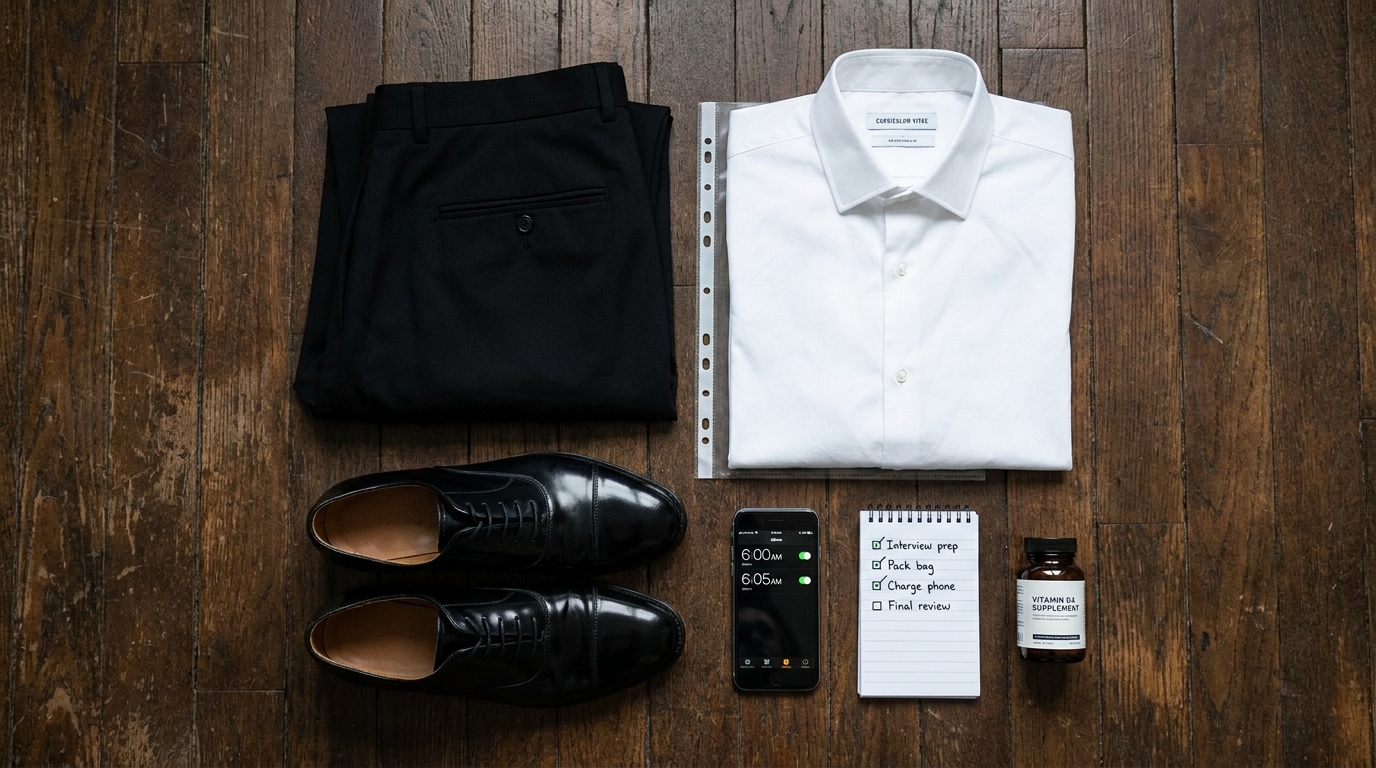
- Outfit laid out and checked — no missing buttons, no stains
- Route planned — know exactly where you’re going and factor in Joburg traffic
- Five key answers rehearsed out loud, not just in your head
- Two questions prepared to ask the interviewer
- CV printed (at least 2 copies)
- Phone charged and alarm set (two alarms)
- Water bottle packed — your throat dries out when you’re nervous
- Early night — a tired brain performs like a stressed one
FAQ
Q1: What are the most common interview questions in South Africa? Tell me about yourself, Why do you want this role, What are your strengths and weaknesses, Where do you see yourself in 5 years, and Why should we hire you. These five come up in almost every SA interview across industries.
Q2: How do I answer “Tell me about yourself” in an interview? Use Present-Past-Future. Who you are now, your relevant background, where you’re heading and connect that last part directly to the role. Keep it under 60 seconds.
Q3: What should I wear to a job interview in South Africa? Business casual covers most SA companies. Go fully formal for banking, law, or corporate roles. Smart casual works for tech and creative environments. When you’re genuinely unsure, overdress by half a step it’s always easier to dress down than explain why you underdressed.
Q4: How do I handle a panel interview? Eye contact to the person who asked, then scan the room as you finish. Use names when you know them. Stay concise panels lose interest in long, wandering answers faster than a single interviewer does.
Q5: What questions should I ask at the end of an interview? Ask how success is measured in the first 90 days, what growth looks like for strong performers, and what the team’s biggest current challenge is. Never ask about leave or salary in round one unless they initiate it.
The Real Takeaway
Ashwagandha won’t get you the job. Preparation does. But if you’ve done the work and your nervous system keeps overriding your competence, it’s a legitimate, research-backed tool not a shortcut.
Start it 3–4 weeks out. Take it consistently. On interview day, eat a real breakfast, arrive early, and trust the preparation you’ve already put in.
The candidates who get hired aren’t always the most qualified. They’re the ones who show up calm, clear, and ready to have a real conversation.
Got your interview? Find your next opportunity on WorkScout → workscout.co.za
Found this helpful? Save it and share it with someone who needs it right now.
WorkScout | workscout.co.za — Browse thousands of SA jobs.
This article contains affiliate links. WorkScout may earn a small commission at no extra cost to you if you purchase through these links.